About
Dr. John Doe
Professor · Department of Statistics
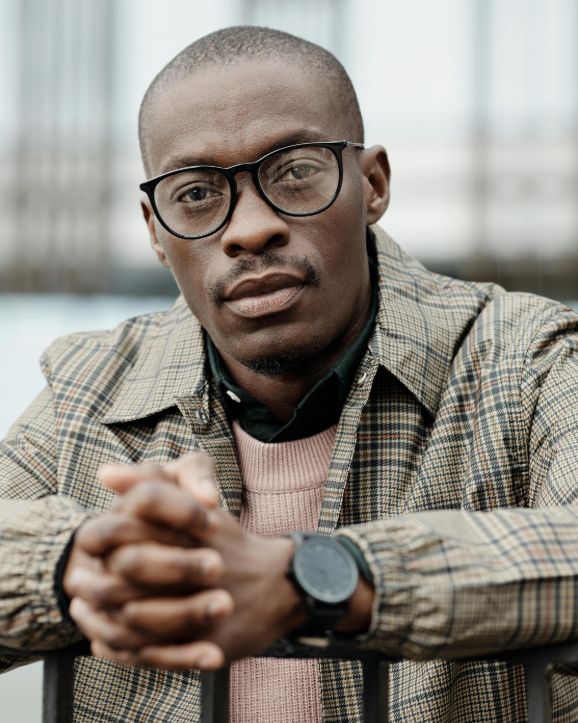
Bio
Biography
Early Life and Education
Born in Seattle, Washington, Dr. John Doe’s fascination with patterns began not with numbers, but with the migratory habits of birds in the Pacific Northwest. This curiosity led her to pursue a B.S. in Mathematics, followed by a Ph.D. in Statistics from Stanford University. Her dissertation focused on the development of new algorithms for high-dimensional data, specifically looking at how to minimize "noise" in massive datasets without losing critical outliers.
Academic Career and Research
Dr. John Doe has dedicated her career to making sense of uncertainty. Her research primary focuses on Spatiotemporal Modeling, which allows scientists to predict how environmental variables—like ocean temperatures or air quality—change over both space and time.
Her most cited work involves the use of the Markov Chain Monte Carlo (MCMC) method to estimate parameters in complex biological systems. By refining these models, he provided the framework for more accurate climate change projections.
Teaching Philosophy
In the classroom, Dr. John Doe is famous (and perhaps slightly feared) for her "Data in the Wild" seminars. He pushes her students to look beyond the clean spreadsheets found in textbooks, often requiring them to scrape their own data from messy, real-world sources. He firmly believes that:
"A statistician’s greatest tool isn't their software; it’s their skepticism. If the data looks too perfect, you probably missed a bias."
Contributions and Legacy
Beyond her research, Dr. John Doe has served as a consultant for the World Health Organization (WHO) and is a Fellow of the American Statistical Association. When he isn't analyzing probability distributions, he is a marathon runner—a hobby he claims is the ultimate lesson in "endurance and long-term trends." He lives in Chicago with her two dogs, whom he has jokingly attempted to train using reinforcement learning principles.
Born in Seattle, Washington, Dr. John Doe’s fascination with patterns began not with numbers, but with the migratory habits of birds in the Pacific Northwest. This curiosity led her to pursue a B.S. in Mathematics, followed by a Ph.D. in Statistics from Stanford University. Her dissertation focused on the development of new algorithms for high-dimensional data, specifically looking at how to minimize "noise" in massive datasets without losing critical outliers.
Academic Career and Research
Dr. John Doe has dedicated her career to making sense of uncertainty. Her research primary focuses on Spatiotemporal Modeling, which allows scientists to predict how environmental variables—like ocean temperatures or air quality—change over both space and time.
Her most cited work involves the use of the Markov Chain Monte Carlo (MCMC) method to estimate parameters in complex biological systems. By refining these models, he provided the framework for more accurate climate change projections.
Teaching Philosophy
In the classroom, Dr. John Doe is famous (and perhaps slightly feared) for her "Data in the Wild" seminars. He pushes her students to look beyond the clean spreadsheets found in textbooks, often requiring them to scrape their own data from messy, real-world sources. He firmly believes that:
"A statistician’s greatest tool isn't their software; it’s their skepticism. If the data looks too perfect, you probably missed a bias."
Contributions and Legacy
Beyond her research, Dr. John Doe has served as a consultant for the World Health Organization (WHO) and is a Fellow of the American Statistical Association. When he isn't analyzing probability distributions, he is a marathon runner—a hobby he claims is the ultimate lesson in "endurance and long-term trends." He lives in Chicago with her two dogs, whom he has jokingly attempted to train using reinforcement learning principles.
Recognition
Awards & Honors
2019
Prime Minister Gold Medal Award
2018
National Science and Technology (NST) Fellowship award