Sensor-based human activity recognition: A comparative study of machine learning techniques
Authors
Mohd Salman Hossain Bhuiyan, Nazmus Sakib Patwary, Protap Kumar Saha, Md Tanvir Hossain
Conference
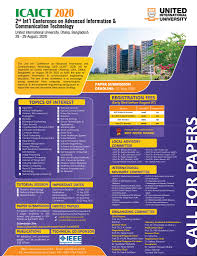
2nd International Conference on Advanced Information and Communication Technology (ICAICT)
United International University (UIU), Dhaka · pp. 286-290 (2020)
Abstract
Human activity recognition (HAR) is a wide field of study which identifies a person’s specific movement or behavior based on sensor data. Recognition of human behavior is the origin of many technologies, such as those concerned with personal biometric signatures, sports training, digital computing, security, health and fitness tracking, ambient-assisted living and management. Studying recognition of human activity shows that researchers are mostly interested in human everyday activities. HAR models input is the reading of the raw sensor data, and output is the prediction of the movement activities of the user. The HAR framework is becoming an evolving discipline in intelligent computing applications in the field of pervasive computing. In our study, we applied several machine learning algorithm along with some preprocessing techniques to identify which algorithm performs better in dataset acquired from the WISDM laboratory, which is available in public domain. The experiment shows that the highest accuracy is achieved in phone accelerometer data using Principal Component Analysis (PCA) with Random Forest (RF) than any other algorithm and preprocessing techniques in terms of human activity recognition. This experiment will help perform more work on the basis of implementing classification and preprocessing techniques to identify human activities.
Cite As
Mohd Salman Hossain Bhuiyan, Nazmus Sakib Patwary, Protap Kumar Saha, Md Tanvir Hossain (2020). Sensor-based human activity recognition: A comparative study of machine learning techniques. 2nd International Conference on Advanced Information and Communication Technology (ICAICT), 286-290.